
Published January 19, 2026
Old Photo Formats Most People Don’t Know Anymore
The world of photography has undergone a seismic shift. Today, we snap photos with smartphones, instantly share them online, and rarely give a second thought to the physical prints. But rewind a few decades, and photography was a much more tactile and complex process. This evolution has left behind a fascinating array of photo formats that are largely unfamiliar to younger generations. Let's take a nostalgic trip and explore some of these forgotten formats.
The Classics: From Tintypes to Daguerreotypes
Before the days of film, photography was a labor-intensive art. These early formats are a testament to the pioneers who pushed the boundaries of image capture:
- Daguerreotypes: Introduced in 1839, these were among the first commercially available photographic processes. Images were created on a silver-plated copper sheet, resulting in a unique, highly detailed, and often mirror-like image. They were incredibly fragile and expensive.
- Tintypes (Ferrotypes): A more affordable and durable alternative to daguerreotypes, tintypes emerged in the 1850s. Images were created on a thin sheet of iron coated with a dark lacquer. They were popular for portraits and were often found at carnivals and fairs.
- Ambrotypes: Similar to tintypes in appearance, ambrotypes used a glass plate as the negative. When backed with a dark material, the negative appeared as a positive image.
The Rise of Film and Paper: A Golden Age of Formats
The invention of film revolutionized photography, making it more accessible and leading to a proliferation of formats. Here are some notable examples:
- Stereo Cards: These cards, popular in the late 19th and early 20th centuries, presented two slightly different images side-by-side. When viewed through a stereoscope, they created a 3D effect, offering a truly immersive photographic experience.
- Glass Plate Negatives: Before flexible film, photographers used glass plates coated with a light-sensitive emulsion. These plates produced incredibly sharp images but were fragile and cumbersome to handle.
- Roll Film (Various Sizes): Roll film, introduced by Kodak, changed everything. Different sizes like 120, 127, and 116 film became standards, each producing distinct image sizes. These films were a staple for decades, powering countless family snapshots and professional photographs.
- Disc Film: A short-lived format from Kodak, disc film used a circular disc of film with multiple small images. It was designed for simplicity but ultimately failed to gain lasting popularity.
- APS Film: Advanced Photo System (APS) was a later attempt to modernize film photography. It offered three different image formats and was designed to be user-friendly, but it was eventually overtaken by digital photography.
Why These Formats Matter Today
These old photo formats are more than just historical curiosities. They represent a rich legacy of innovation and creativity. They also hold a wealth of memories, representing family histories, important events, and the evolution of visual culture. Sadly, these photos are often fragile and vulnerable to damage from age, light, and improper storage.
Bringing the Past into the Present with Photomyne
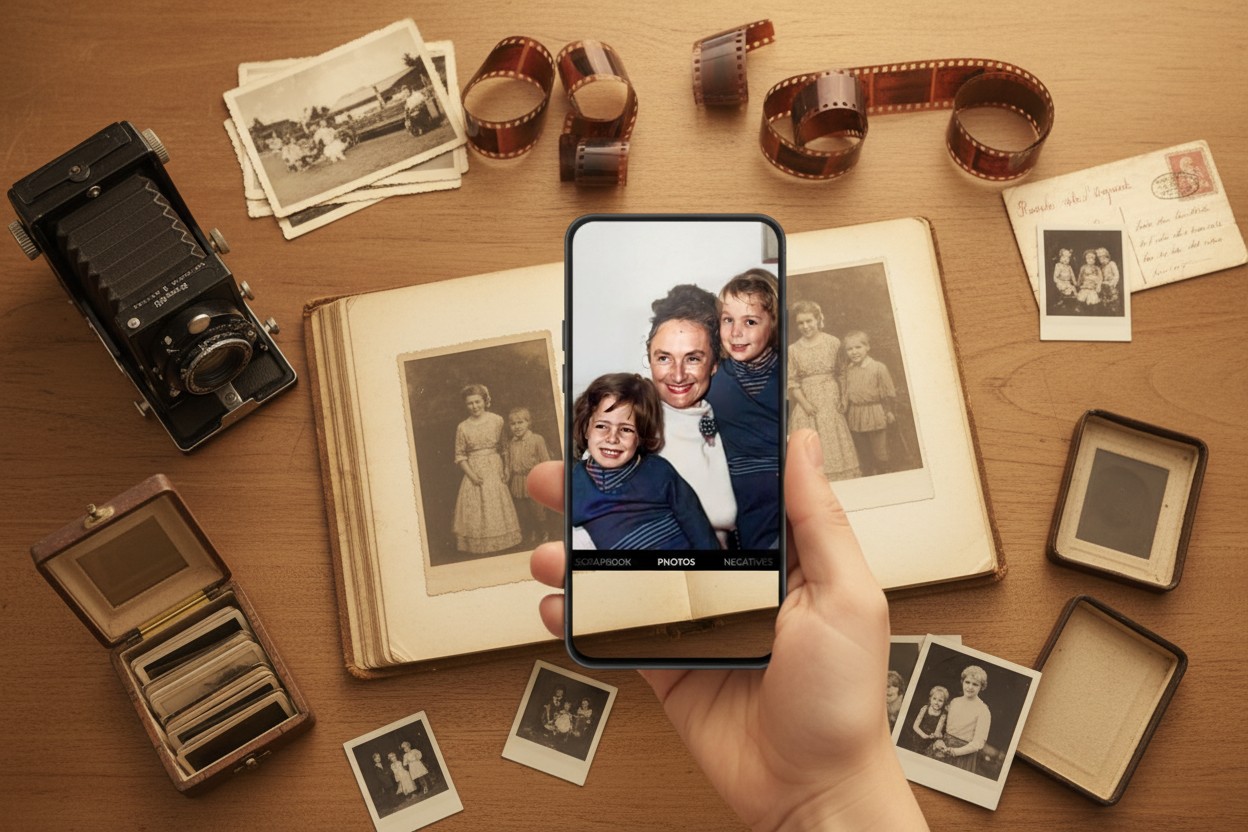
Preserving these precious memories is crucial. But how do you digitize these various formats without specialized equipment and extensive knowledge? That's where the Photomyne app shines. It allows you to easily scan and digitize your old photos, including prints, slides, and negatives, using just your smartphone's camera. The app automatically detects photo boundaries, crops, rotates, and enhances the images, saving you time and effort. You can then organize, share, and preserve your digitized photos for generations to come. Photomyne makes it simple to breathe new life into these forgotten formats, ensuring that these visual treasures are not lost to time.
Exploring these old photo formats is a journey through photographic history. It's a reminder of the ingenuity of the past and the importance of preserving our visual heritage. So, dust off those old albums, and start exploring the fascinating world of forgotten photographs. With tools like Photomyne, you can ensure that these memories live on.