
Published February 25, 2026
Is It Better to Scan Photos at Home or Send Them Out? A Comprehensive Guide
In shoeboxes under the bed, in dusty albums on the top shelf, in carousels tucked away in the attic—our most cherished memories often live in physical form. These printed photographs are priceless windows to the past, capturing everything from a grandparent's wedding day to your own awkward school photos. But they are also fragile. Fading, discoloration, and physical damage are constant threats. The solution? Digitization. By creating a digital copy, you preserve these moments forever.
That brings us to the big question that stumps so many would-be memory keepers: What’s the best way to do it? Should you roll up your sleeves and embark on a DIY scanning project at home, or should you entrust your precious collection to a professional scanning service? The truth is, there’s no one-size-fits-all answer. The right choice depends entirely on your unique circumstances—your budget, your free time, the size of your collection, and your comfort level with technology. Let’s break down the pros and cons of each path to help you decide which is the perfect fit for you.
The Case for DIY: Scanning Photos at Home
Taking on the task of scanning photos yourself is a popular choice for many. It puts you in the driver's seat of your own preservation project. But like any DIY endeavor, it comes with its own set of rewards and challenges.
Pros of DIY Scanning:
- Complete Control: When you scan at home, you have ultimate control over the entire process. You decide which photos get scanned, in what order, and at what quality (resolution). You can meticulously handle that one fragile, torn photo of your great-grandmother with the care it deserves. You can also organize and name your digital files exactly how you want them from the very beginning, creating a system that makes sense to you.
- Cost-Effectiveness (Potentially): If you already own a scanner or your collection is relatively small, the DIY route can be significantly cheaper than a professional service. The primary investment is your time. Even if you need to buy a scanner, it can be a one-time purchase that you can use for future projects or document scanning.
- Immediate Access & Gratification: There’s no waiting for a package to ship or a service to process your order. As soon as you scan a photo, it’s available on your computer. This instant access allows you to immediately share a rediscovered gem on social media, email it to a relative, or use it in a digital photo frame. There's a unique joy in unearthing and digitizing a memory in real-time.
- Unmatched Privacy and Security: For many, this is the most important factor. Your photos are deeply personal. By scanning them at home, they never leave your possession. You don’t have to worry about your irreplaceable originals getting lost or damaged in the mail, or your private family moments being seen by strangers.
Cons of DIY Scanning:
- Extremely Time-Consuming: Do not underestimate the time commitment. Scanning photos, especially with a traditional flatbed scanner, is a slow, methodical process. Scanning one photo, adjusting the settings, saving the file, and repeating the process hundreds or thousands of times can take dozens, if not hundreds, of hours.
- Equipment Cost and Learning Curve: While potentially cheaper, getting good results requires decent equipment. A high-quality flatbed scanner that can produce sharp, color-accurate images can be a hefty investment. Furthermore, there's a learning curve to using the scanner's software effectively. Understanding terms like DPI (dots per inch), file formats (JPEG vs. TIFF), and color correction tools is necessary to get the best results.
- The Tedium Factor: What starts as an exciting project can quickly become a monotonous chore. The initial enthusiasm for rediscovering old memories can wane after the hundredth scan, and many DIY projects end up half-finished, with boxes of photos sitting next to a neglected scanner.
Modern Tools for the DIY-er
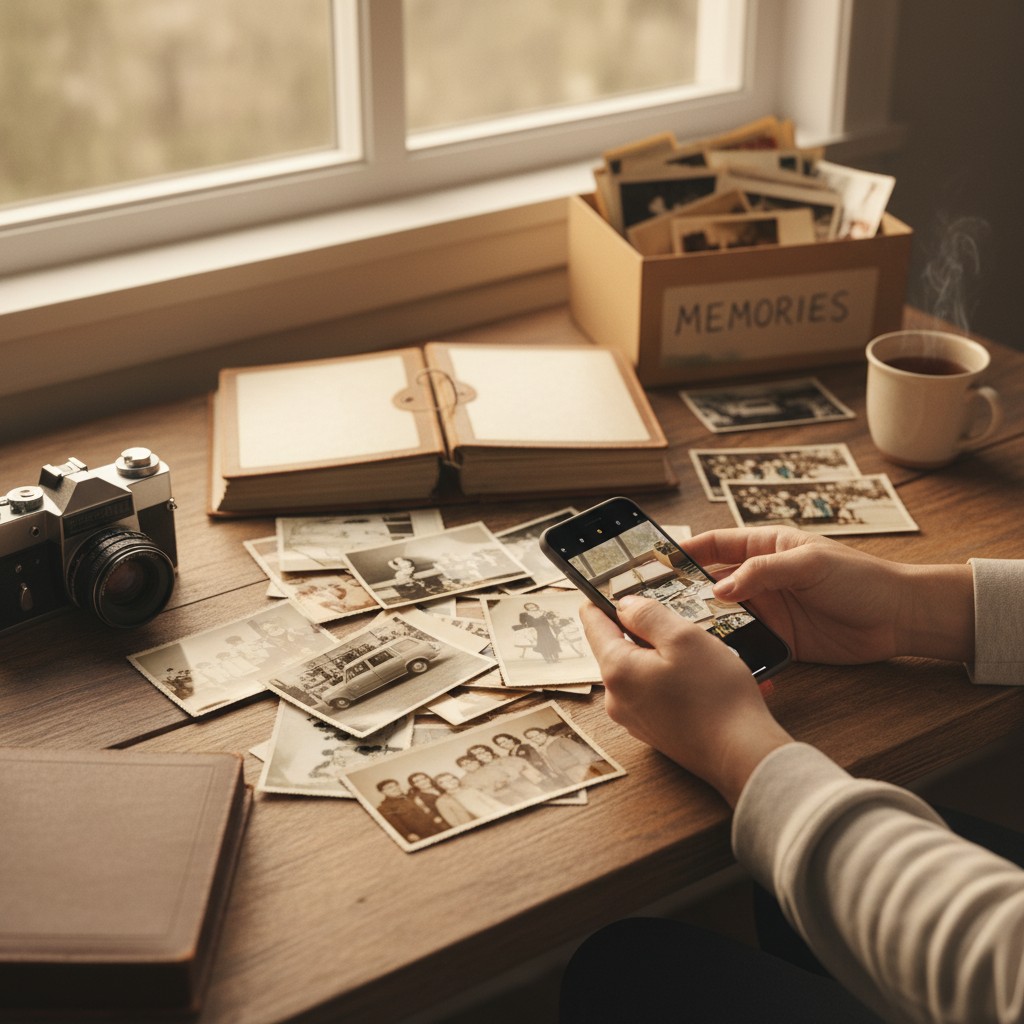
The image of being chained to a bulky flatbed scanner is no longer the only DIY reality. Technology has provided more accessible options. For those who find traditional scanners intimidating or the process too slow, modern scanning apps have become a game-changer. Using just the smartphone in your pocket, you can digitize a surprising variety of media. For instance, an app like Photomyne is designed to handle everything from standard 4x6 prints and Polaroids to more challenging formats like 35mm slides and even handwritten letters. These apps often use powerful AI to automate tedious tasks like detecting photo boundaries, cropping, and enhancing colors, dramatically speeding up the workflow while keeping your precious photos safely in your hands. Plus, with a strong focus on privacy, your scanned images are typically stored with bank-level encryption, and you always retain full ownership—a key consideration when handling personal memories.
The Professional Route: Sending Your Photos Out
If the thought of a massive DIY project fills you with dread, a professional scanning service might be your saving grace. These companies are built to handle bulk digitization projects efficiently and effectively.
Pros of Professional Services:
- Unbeatable Convenience and Time-Saving: This is the number one reason people choose a professional service. You simply box up your photos, ship them off (often in a pre-paid, specially designed box provided by the company), and wait for the magic to happen. A project that would have taken you months of evenings and weekends is completed for you. It's the ultimate "set it and forget it" solution for busy individuals.
- Superior Equipment and Quality: Professional services use commercial-grade, high-speed scanners that far surpass the capabilities of most consumer models. These machines are calibrated for optimal color accuracy and can capture images at extremely high resolutions. They are equipped to handle a vast array of media, including slides, film negatives, and various photo sizes, often with better results than you could achieve at home.
- Expertise and Enhancement: The technicians at these services are trained professionals. They know how to handle aged and fragile materials and how to optimize scanner settings for different types of media. Most services also include manual or automated enhancements like dust and scratch removal, color correction, and red-eye reduction, saving you the trouble of post-processing the images yourself.
Cons of Professional Services:
- The Cost: Convenience comes at a price. Professional scanning is typically priced per photo, per slide, or per inch of film. For a large collection of thousands of photos, the cost can quickly escalate into hundreds or even thousands of dollars. You are paying for the time, equipment, and expertise, and it's a significant investment.
- Risk and Lack of Control: Handing over your one-of-a-kind originals can be nerve-wracking. While reputable companies have excellent track records and insurance policies, the risk of your package being lost or damaged in transit—however small—is always present. You also cede control over the process. You can't hover over the technician's shoulder to ensure every photo is scanned to your exact liking.
- Turnaround Time: Unlike the instant gratification of DIY, professional services require patience. Depending on the company's backlog and the size of your order, it can take anywhere from a few weeks to several months to get your digital files and original photos back.
Making the Right Choice: A Decision Framework
So, how do you choose? Ask yourself these key questions:
- How many photos do you have? For a small collection of under 200 photos, a DIY approach is very manageable. For a massive archive of 1,000+, the time savings from a professional service may be well worth the cost.
- What is your budget vs. the value of your time? If your budget is tight, DIY is the clear path. If you have more financial flexibility, ask yourself: what is my free time worth? The cost of a service might be less than the value of the dozens of hours you'd spend scanning.
- How tech-savvy and patient are you? If you enjoy learning new software and find methodical projects relaxing, you might love the DIY process. If you're easily frustrated by technology and repetitive tasks, a professional service will save you a lot of headaches.
- How fragile or irreplaceable are your photos? If you have extremely delicate, one-of-a-kind heirlooms, the thought of mailing them might be too stressful. A careful, at-home scanning method might provide better peace of mind.
The Hybrid Approach: The Best of Both Worlds
Remember, this doesn't have to be an all-or-nothing decision. A hybrid approach can be a fantastic solution. Consider scanning your absolute "A-list" photos yourself—the most meaningful, most cherished images that you want to personally handle and perfect. Once you have those safely digitized, you can send the remaining bulk of your collection to a professional service to efficiently complete the project.
The most important step is simply to start. Don't let indecision lead to inaction. Whether you choose to scan them yourself on a quiet weekend, send them off to the experts, or use a combination of both, the goal is the same: to safeguard your precious memories. By liberating them from the dusty shoebox, you ensure they can be easily shared, enjoyed, and passed down for generations to come.