
Published February 25, 2026
The Unspoken Comfort of Revisiting Old Memories Through Photos
There’s a unique magic hidden away in the quiet corners of our homes. It might be in a dusty shoebox in the attic, a stack of thick, vinyl-paged albums on a bookshelf, or a forgotten carousel of slides tucked away in a closet. It’s the magic of the captured moment. We live our lives in a relentless forward motion, but these humble paper rectangles hold the power to stop time, to pull us back, and to wrap us in a blanket of profound and gentle comfort.
But what is it, exactly, about looking at old photographs that feels so good? Why does sifting through faded images of birthday parties from the 80s, awkward teenage school pictures, or a black-and-white photo of grandparents we never met feel less like an act of remembrance and more like an act of emotional nourishment? The answer lies in a beautiful intersection of psychology, storytelling, and the fundamental human need for connection.
The Gentle Power of Nostalgia
For a long time, nostalgia was viewed with suspicion, often dismissed as a sentimental, even unhealthy, longing for a past that never truly existed. It was seen as a retreat from the challenges of the present. However, modern psychology has reframed our understanding of nostalgia, revealing it to be a powerful and positive psychological resource. When we look at an old photograph, we’re not just seeing an image; we’re activating a complex network of emotions, senses, and memories.
Think about finding a photo from a childhood beach vacation. You don’t just see the grainy image of a smiling, sun-kissed kid with a plastic bucket. You can almost feel the warmth of the sun on your skin, smell the salty air, and hear the distant cry of seagulls. This sensory experience is a key part of nostalgia’s power. Studies have shown that inducing nostalgia can lead to a host of benefits:
- Increased Optimism: By reminding us of happy times and our capacity for joy, nostalgia can make us feel more optimistic about the future.
- Boosted Social Connection: Many of our most cherished photos involve other people—family, friends, and loved ones. Revisiting these moments reinforces our sense of belonging and strengthens our feelings of being loved and supported, even if those people or relationships have changed over time.
- Enhanced Sense of Self: Nostalgia provides a sense of continuity. It connects the person you are today with the person you were yesterday, last year, or decades ago. It creates a coherent narrative of your life, reminding you of the journey you’ve taken and the experiences that have shaped you. In a world that often feels chaotic and fragmented, this continuous thread of identity is incredibly comforting.
Looking at old photos is like dipping into a well of positive emotions. It’s a reminder that our lives have been filled with meaning, love, and happiness, providing a vital counterbalance to the stresses and anxieties of the present day.
Anchors in a Sea of Change
Life moves fast. Technology evolves, cities transform, we change jobs, move houses, and our relationships shift and grow. In this constant state of flux, old photographs serve as invaluable anchors. They are fixed points in our personal history, tangible proof of where we’ve come from. A photo of your first apartment, with its mismatched furniture and hopeful energy, grounds you. A picture of your parents as a young couple, vibrant and full of dreams, provides a profound sense of lineage and history.
These images remind us that while much has changed, some things remain constant. The love of a parent, the bond of a sibling, the laughter of a dear friend—these core elements of our lives are often the central subjects of our photo collections. When we feel adrift, a quick journey through an old album can be a powerful way to reorient ourselves. It’s a visual confirmation of our roots, our resilience, and the enduring relationships that form the bedrock of our existence. They are personal time capsules that tell us, “This happened. This was real. This is part of your story.”
The Bridge Between Generations
One of the most beautiful aspects of revisiting old photos is the way they become catalysts for storytelling. A photograph is rarely just a silent image; it’s a conversation starter, a memory prompt, a talking stick passed from one generation to the next.
Imagine gathering with family and opening an old album. A simple black-and-white photo of a group of people at a picnic can unlock a torrent of stories. A grandparent might point to a face and say, “That was my Uncle Frank. He was the funniest man I ever knew. Let me tell you about the time…” Suddenly, a person who was just a face in a photo becomes a character in the family saga. Children and grandchildren listen, captivated, as the past comes alive through oral history. They learn not just names and dates, but personalities, quirks, and the texture of a time they never experienced firsthand.
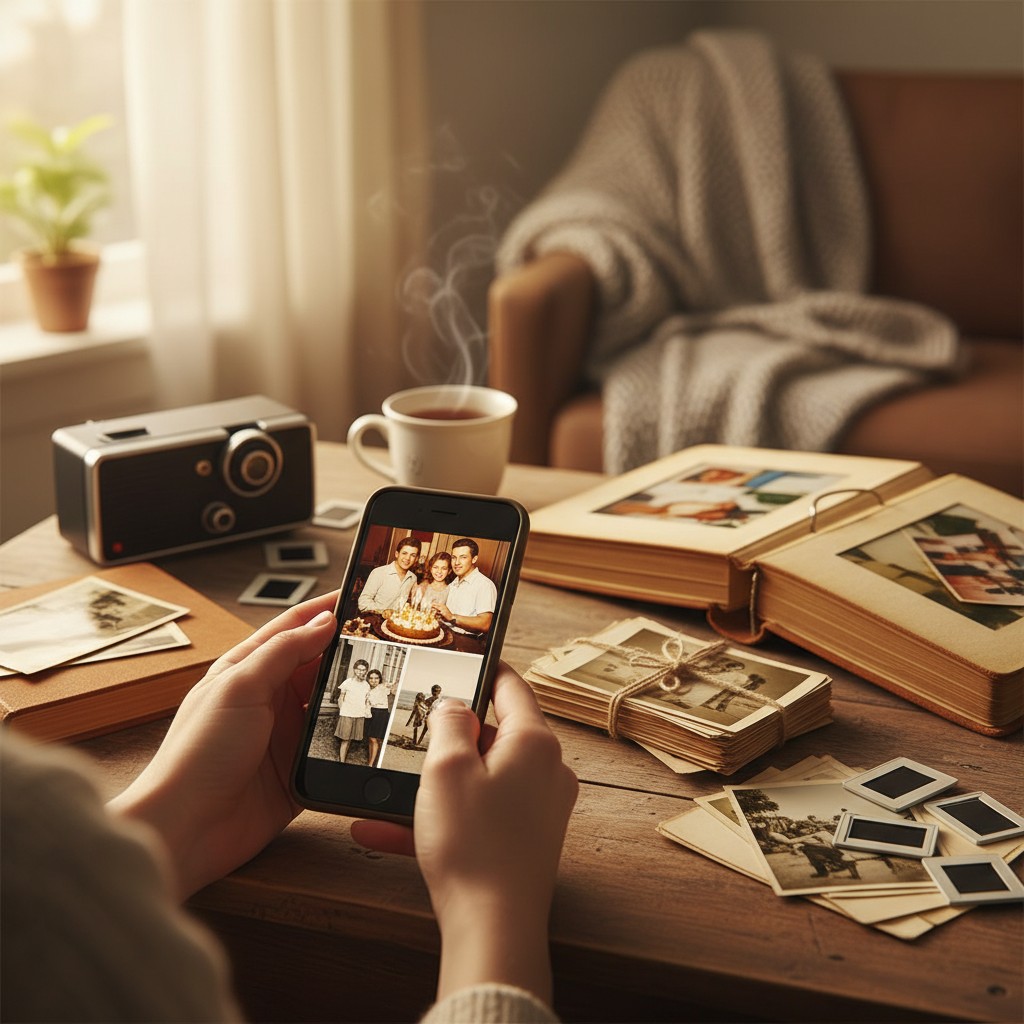
This shared act of remembrance is a powerful bonding experience. It collapses time, allowing a teenager to connect with their great-grandparents’ world. It fosters empathy and understanding, and it ensures that the family’s legacy is not lost. The challenge, of course, is that these physical artifacts are often singular, fragile, and stored away. This is where the magic of modern technology can be so helpful. Taking the time to digitize these collections, perhaps using a tool like the Photomyne app which is specifically designed to scan entire album pages or loose photos in seconds, transforms them. A dusty, solitary album can become a vibrant, shareable digital library that can be sent to relatives across the globe, ensuring these stories and faces are preserved and accessible for generations to come. It turns a passive viewing experience into an active, collaborative project of family history.
Reconnecting with Ourselves and Those We’ve Lost
There is also a deeper, more personal comfort that comes from our photo archives. They allow us to spend time, in a way, with people who are no longer with us. Looking at a photograph of a loved one who has passed can be a bittersweet experience, but it is often more sweet than bitter. It’s a way to remember their smile, the light in their eyes, and the joy they brought into our lives. It keeps their memory vivid and present, offering solace and a feeling of continued connection.
Furthermore, old photos allow us to reconnect with previous versions of ourselves. We can look at the child with the scraped knees and feel a surge of tenderness. We can see the awkward teenager navigating high school and feel a sense of empathy and pride for how far we’ve come. We can revisit the young adult starting their career and remember the ambition and uncertainty of that time. This act of self-reconnection is a form of self-compassion. It reminds us that we have always been a work in progress, and it honors all the "selves" we have been along the way.
So, the next time you feel the pull to open that old album or scroll through a folder of digitized memories, lean into it. You are not simply wasting time or dwelling on the past. You are engaging in a deeply human act of self-care and connection. You are tending to your own story, watering your roots, and reminding yourself of the rich, beautiful, and complex tapestry that is your life. That shoebox in the attic isn’t just full of old paper; it’s full of comfort, waiting for you to find it.