
Published January 28, 2026
Why Printed Photos Don’t Fit Modern Habits
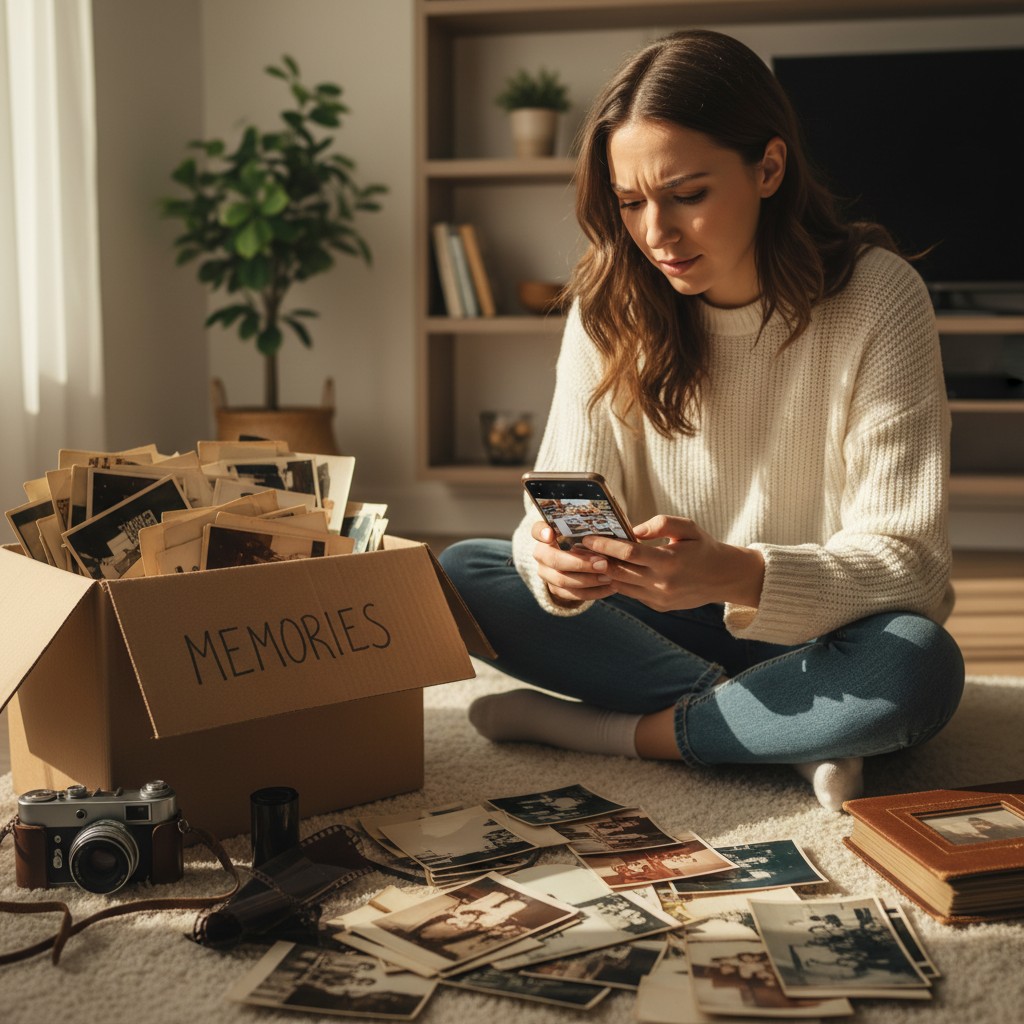
We’ve all been there. You unearth a box of old printed photos, a treasure trove of memories. You spend hours sifting through them, reminiscing, and maybe even shedding a tear or two. It's a powerful experience, but let's be honest: in today's digital world, those printed photos often feel a little… outdated. They don’t quite mesh with the way we live, share, and enjoy our memories now. So, why is that? Let's explore why printed photos struggle to fit into modern habits.
The Inconvenience Factor: Physical Limitations
Printed photos, while charming, come with a set of inherent limitations that clash with our modern, fast-paced lives:
- Storage Woes: Where do you *actually* put them? Boxes, albums, drawers – all require dedicated space. And if you're like most people, finding that space can be a challenge. Physical storage also makes them vulnerable to damage from things like floods, fires, or even just the slow degradation of time.
- Accessibility Challenges: Want to show off your vacation photos to a friend across the country? Good luck! Sharing printed photos requires physically mailing them, scanning them (which can be a hassle), or relying on someone else to do the work. Instant gratification? Not so much.
- Limited Sharing Options: Sharing a single printed photo with multiple people simultaneously is impossible without making copies (which degrades quality) or gathering everyone in the same room. The social aspect of photo sharing, so central to modern life, is severely limited.
- Fragility and Loss: Accidents happen. Photos can be torn, stained, lost, or damaged beyond repair. Once a printed photo is gone, it's often gone forever (unless you have a digital backup, which, ironically, defeats the purpose of the print).
The Digital Revolution: How We Consume Content Now
Our habits have shifted dramatically. We live in a world of instant access, constant connection, and seamless sharing. Printed photos simply can't compete with the advantages offered by digital alternatives:
- Ubiquitous Sharing: Social media platforms, messaging apps, and cloud storage services make sharing photos incredibly easy, instantaneous, and global. You can share with individuals, groups, or the entire world with a few taps.
- Accessibility from Anywhere: Digital photos are accessible on smartphones, tablets, computers – anywhere with an internet connection. You can revisit memories anytime, anywhere.
- Easy Editing and Enhancement: Digital photos can be easily edited, cropped, and enhanced with a variety of tools, allowing you to improve their appearance and preserve them for future generations.
- Unlimited Storage (Virtually): Cloud storage offers vast, affordable, and secure storage solutions, eliminating the physical constraints of printed photos. You can back up your entire photo collection and never worry about losing them.
- Searchability and Organization: Digital photos can be tagged, organized into albums, and easily searched using keywords, dates, or even facial recognition. Finding a specific photo in a digital library is far easier than sifting through a box of prints.
The Shift in Focus: From Possession to Experience
Our relationship with photos has evolved. We're less focused on possessing a physical object and more interested in the experience of remembering and sharing. Digital photos facilitate this shift:
- Focus on the Moment: Digital photography allows us to capture more moments, more frequently. We're less precious about each individual photo and more focused on documenting our lives.
- Emphasis on Connection: Sharing photos online fosters connection and allows us to stay in touch with loved ones, regardless of distance.
- The Power of Storytelling: Digital platforms allow us to create narratives around our photos, adding captions, comments, and context that enhance the storytelling experience.
The Future of Photos: A Hybrid Approach
While printed photos may not be the primary way we interact with our memories anymore, they still hold a special place in our hearts. The future of photos likely involves a hybrid approach, where:
- Digital is King: The vast majority of our photos will be digital, stored in the cloud, and easily shared.
- Print is Special: We'll selectively print photos for special occasions, creating tangible keepsakes for ourselves and loved ones.
- Technology Bridges the Gap: Tools like Photomyne allow us to digitize our printed photos, bridging the gap between the physical and digital worlds, preserving the past while embracing the future.
Ultimately, the value of a photo lies in the memory it evokes. Whether it's a printed photograph or a digital image, the goal is the same: to preserve and cherish the moments that make up our lives. By understanding how our habits have changed, we can find the best ways to keep those memories alive.