
Published January 04, 2026
Looking Through Old Photos Feels Different Than Scrolling a Phone
Ever stopped to consider why flipping through a box of old photos feels so profoundly different than endlessly scrolling through your phone's photo library? It's a feeling we all recognize, that subtle shift in mood, the way time seems to bend a little. Let's delve into why these two experiences, both involving visual memories, evoke such distinct reactions.
The Tangible Touch of Time
Holding a photograph, a physical print, is an act of connection. You feel the paper's texture, the slight imperfections, the evidence of time etched onto its surface. It's a tangible link to the past, a relic you can hold in your hands. This physical interaction is a powerful trigger for our senses. The scent of aged paper, the slightly faded colors – these details immerse us in a moment, making the memory feel more real, more immediate.
Scrolling through a phone, on the other hand, is a purely digital experience. The images are pristine, perfectly preserved, but they lack that crucial element of physicality. We're interacting with a screen, a cold, smooth surface that offers no sensory cues beyond the visual. This detachment can create a sense of distance from the memories themselves.
The Pace of Remembrance
Flipping through a photo album or a box of prints is a deliberate act. It's a slow, considered process. You pause on each image, allowing yourself to fully absorb the details, to let the memories wash over you. There's a natural rhythm to it, a gentle ebb and flow of nostalgia.
Scrolling on a phone, however, is often a rapid-fire experience. We're bombarded with images, quickly swiping through them, often without giving each one the attention it deserves. This fast-paced consumption can lead to a sense of superficiality, a feeling that we're skimming the surface of our memories rather than truly engaging with them.
The Power of Context
Old photos often come with built-in context. They might be accompanied by handwritten notes on the back, faded captions, or even the remnants of a forgotten conversation. These details provide crucial clues, helping us to reconstruct the story behind the image and to connect with the emotions of the moment.
Digital photos, while often tagged and organized, can sometimes lack this rich context. Without the physical cues and the accompanying details, it can be harder to fully grasp the significance of a particular image, to remember the who, what, when, and why.
Bridging the Gap: Bringing the Past into the Present
So, how do we reconcile the beauty of old photos with the convenience of the digital age? How do we preserve the tangible experience while still enjoying the ease of modern technology? The answer lies in finding ways to bridge the gap.
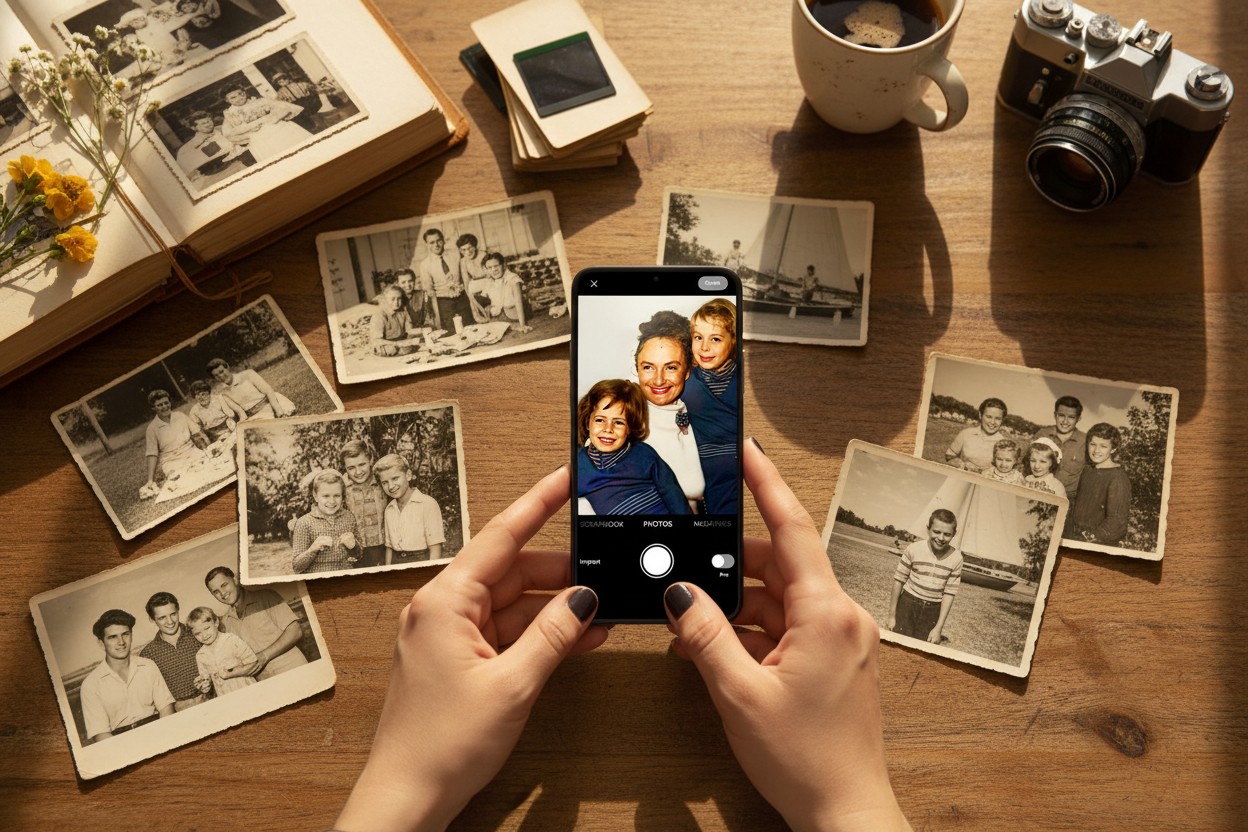
This is where tools like the Photomyne app come into play. It allows you to quickly and easily scan your old photos, transforming them into digital images that you can view, share, and preserve. But it goes beyond just scanning. Photomyne helps you add context by allowing you to add captions, dates, and even voice recordings to your photos. This helps to recreate the rich experience of flipping through a physical album, but in a digital format. It makes it easy to share those precious memories with loved ones, wherever they are, and to ensure that the stories behind the photos live on.
The Enduring Magic of Memory
Ultimately, both old photos and digital images serve the same purpose: to preserve our memories. But the way we interact with these memories can profoundly affect our experience. By understanding the differences between the two, we can appreciate the unique magic of holding a tangible photograph while also embracing the convenience of the digital world. It's about finding the balance, about honoring the past while embracing the future, and about keeping those precious memories alive for generations to come.